@yadavaryan17 @faisal_ansari @shreyamali01 @Devansh_Deep_Gupta @Ayush-1127 @abhishek2634
Hi everyone, please make sure to submit your proposals before time on the GSoC’s portal.
@armanalam03 I have already submitted my proposal before the deadline of gsoc
Thank you, everybody, for your interest and for your applications. We now await the results (regarding which projects have been accepted) to be announced in a couple of weeks.
In the meantime, we have a test site live at test.scicommons.org. The site now needs to be adversarially tested, and bugs reported so that we can fix them – we would greatly appreciate all help in this area. You can use Github to file the issues. Thank you !
2 Likes
Hello everybody, The GSoC results have been announced, I believe, and we have had 1 proposal that was accepted for this project.
A few notes here:
- Thank you to everyone who worked hard on their proposals.
- We rank the proposals and then GSoC and INCF together work to allocate a certain number of slots across the org: GSoC decides the number of slots. This year, around 8 % of proposals were accepted (compared to 16 % or so last year, I hear), and so getting 1 proposal accepted for this project is the median expectation for us based on recent history; sometimes, we have had up to 3, but 1 is very much the norm.
- If you were not accepted this year, but the project speaks to you, then if you are able, I encourage you to work actively with the project and potentially apply next year. We have had multiple interns in recent years (and this one too), who were unsuccessful in their first attempt, but applied again the next year – making contributions as a volunteer is the best way to strengthen one’s application for the following year.
I hope this helps answer any questions you may have. All the best from our side.
1 Like
Hi @suresh.krishna @armanalam03 Sir,
I want to know whether SciCommons project will come in Gsoc’26 . I have contributed last year in this project but my proposal was not selected.
If this project will come then let me know the work that is left in Gsoc 25 so that i can start doing contributions. also tell me which branch to clone both for frontend and backend.
Thank You
@abhishek2634 - thank you for your email. starting early is indeed the right approach to maximize your chances. yes, we do anticipate having scicommons be listed as a gsoc project under incf in 2026, if all goes well.
that said, contributing requires a reasonably sustained and reliable commitment with a certain number of hours every weeks or at least every 15 days, otherwise, it ends up taking up too much of our time. so the first question is : realistically, and without over-promising at all, and on average (accounting for exams, vacations trips etc), how much time would you spend per week on the project ?
best, suresh
@abhishek2634 - we can continue the conversation via direct message
Hi @suresh.krishna , @armanalam03 , and everyone,
I’m Samridhi Raj Sinha, a final-year Computer Engineering student with strong foundation in Python programming, NLP, web development, LLMs through previous experience from internships at IIT Gandhinagar, Jio Platforms, and Nanavati Hospital.
I’m excited about SciCommons and would love to contribute as part of the upcoming GSoC cycle. I’ve set up the SciCommons-backend locally and started exploring the roadmap.
One area I’m currently looking into is Zotero integration. I’m experimenting with a small Citation Service Adapter in articles/api.py to map Zotero library data to the SciCommons Article model for easier reference imports.
I’m putting together a proof of concept and plan to share a PR soon. Looking forward to contributing and learning with the community!
I’d also love to know if there are other areas where contributions would be most valuable right now
Best, Samridhi :))
Hi @sam22ridhi , welcome to the project. I see you have already setup the backend locally which is great. You can explore the Zotero integration feature. looking forward to discuss more on your findings and PR.
Please feel free to connect in case of any doubts. - Thanks!
2 Likes
Hello Samridhi, Thank you for your interest. @armanalam03 will post here soon to invite all serious potential contributors to a public community on a test SciCommons site so that we can discuss there, and essentially test the site that way. Your idea of Zotero integration is good, but a browser extension may be a better first step that we need. We can talk about that. Welcome aboard.
1 Like
Hello everyone,
I’m Hemant Machiwar, a B.Tech student at NIT Hamirpur, Himachal Pradesh, India, and I’m very interested in contributing to INCF projects as part of my preparation for GSoC 2026.
I’ve gone through the INCF ideas list and contribution guidelines, and I’ve also created an account on Neurostars. I would now like to start contributing through small, beginner-friendly issues to understand the relevant codebases and workflows better.
I have experience with JavaScript (MERN/Next.js) and a working knowledge of Python, C++, and Java, and I’m comfortable setting up projects locally and contributing via GitHub.
I would really appreciate guidance on:
- Which repositories or projects would be best suited for a beginner contributor
- Where should I start to understand the codebase effectively
- Any recommended issues or tasks that would be valuable to work on initially
I’m eager to contribute consistently and learn in the process. Thank you for your time and for maintaining such impactful open-source projects.
Best regards,
Hemant Machiwar
Hello Hemant… this is the page for the Scicommons project. You shoudl go through the list of INCF projects from last year, and also those with pages on this site, and find one that speaks to you…
Hi @suresh.krishna and @armanalam03 and everyone!
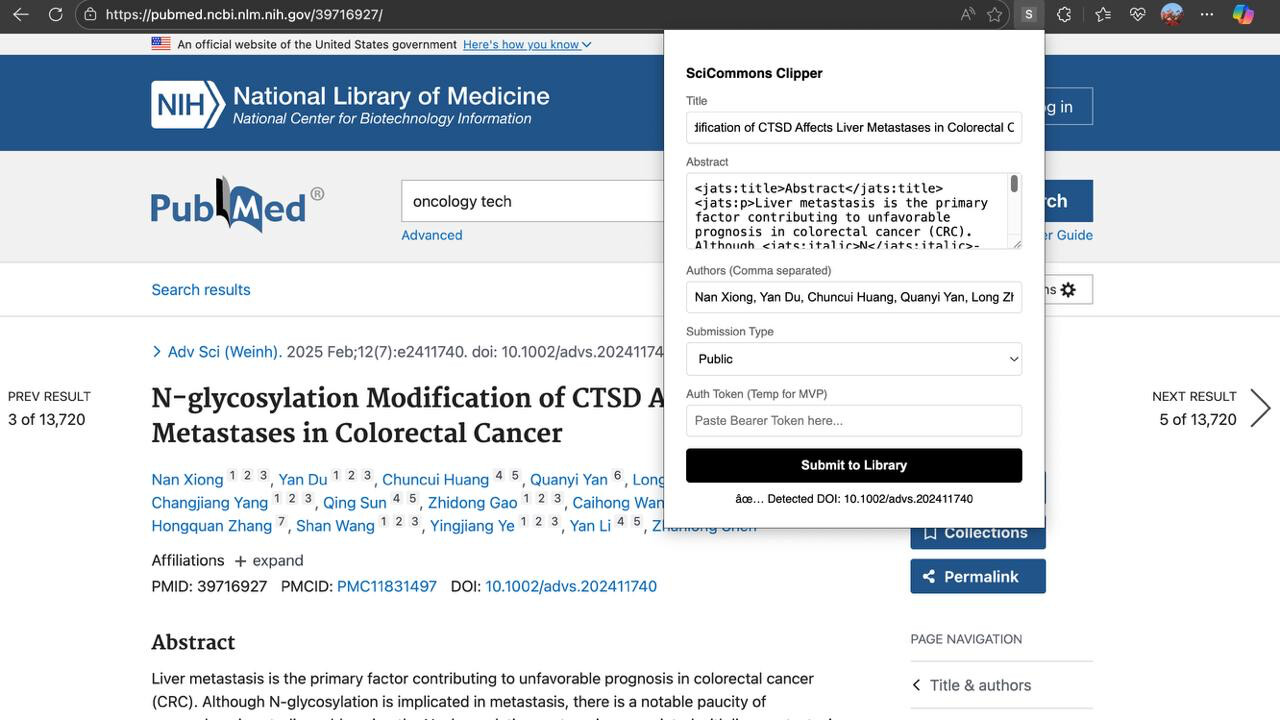
I wanted to share a quick update. I’ve finished a working MVP of a SciCommons Browser extension as we had discussed( also on test site) and successfully integrated it with the backend and frontend locally.
The extension lets you clip a paper directly from sites like PubMed or Nature etc, automatically extracts the DOI and metadata (title, abstract, authors), and submits it to your SciCommons library with a single click.
While building this, I had to tackle a few integration issues - I have fixed and added as #PR 115:
- Handling authentication securely from a browser extension
- Fixing CORS so the backend accepts extension requests
- Cleaning up serializer issues that were causing server-side errors
The full flow now works smoothly.
Below is the link for browser extension code - GitHub - sam22ridhi/scicommons-clipper-extension
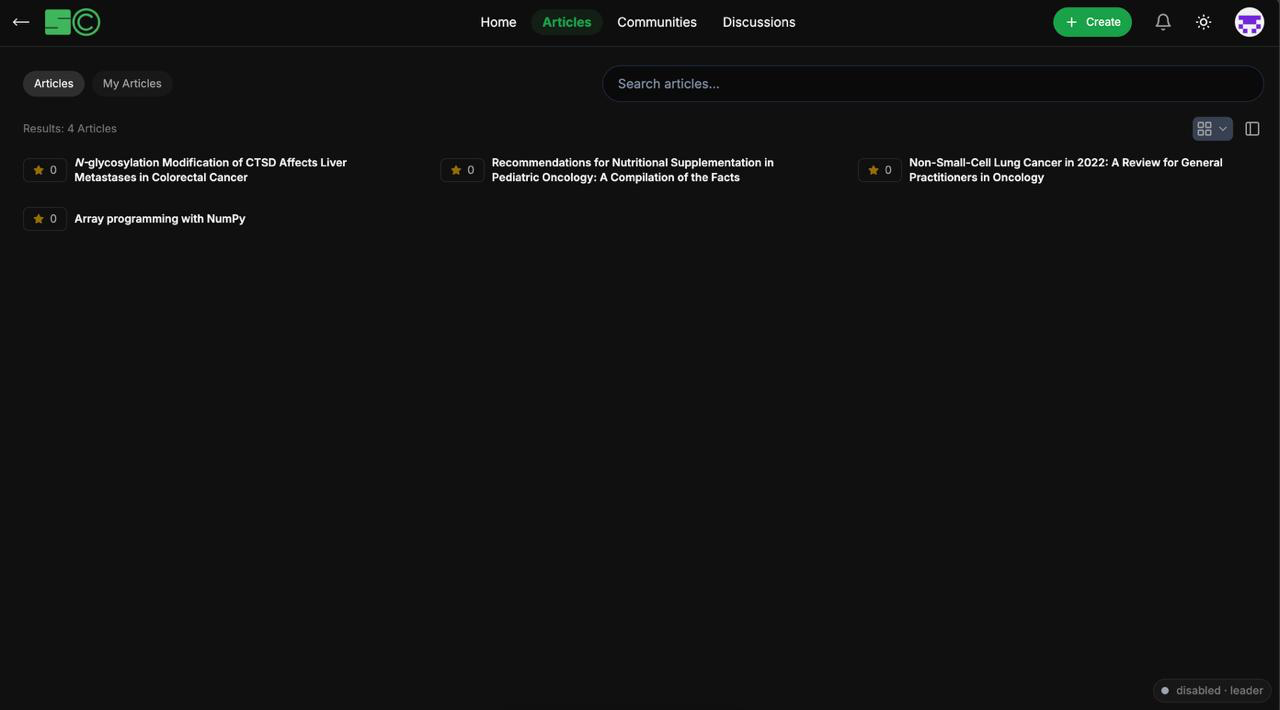
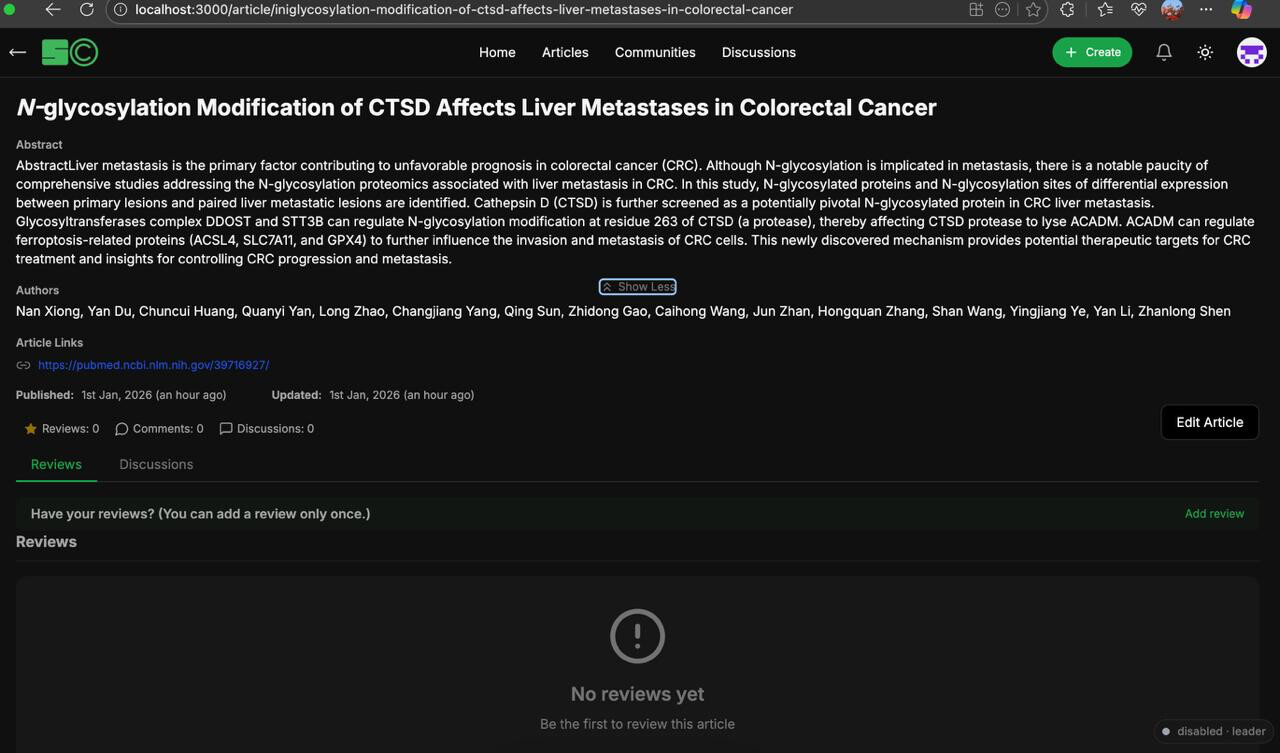
I am attaching some images of the working of extension, please review and let me know the feedback!
-
Browser extension UI automatically extracts metadata
-
All articles added to frontend using extension - connected to both backend and frontend.
-
Final extracted result
1 Like
@sam22ridhi - this is great, could you please post this on the gsoc 2026 channel in the scicommons test site so that we can discuss it further there ? Also, please use that channel for future updates. Thank you !
Yes okay sure I will post this on the gsoc26 channel and use that channel for future updates.
hello, how I can acccess that channel?
Hi @Ayush_kumar_rai , please join this community - SciCommons
Thank you sir for sending channel. I requested to join gsoc2026 community.
Can I start working on Scicommons issues from frontend and backend both?
I too have sent an req to join the group, but still I there’s so little activity over the backend repo. When can we expect it to become active?
Hi @ashishum , welcome!
I have accepted your request (@Ayush_kumar_rai yours as well).
You can start going through frontend and backend repo. We usually do not have much activity over backend repo, but you can of course start contributing to the project. Right now we are aiming to have a thorough user testing of the frontend through which we can find bugs, report them and work towards resolving them. I would request you both to start having discussions in gsoc26 community channel. While using the platform, you will find many bugs which you can report and work on them.
1 Like