Hello experts,
I Apologize in advance if this is not the right place to pose this question, I could not find a more appropriate forum. I am trying to reproduce the infant QSIPrep pipeline as used for HBCD, and I was wondering why Eddy’s slice-to-volume correction was not used in the HBCD diffusion pipeline (config CBRAIN file 5132213), since it is a very helpful tool in infant imaging.
In my experience, it takes an extreme amount of computing power, so I was wondering if this was the main factor that led to the omission of this processing step. Thank you.
Best,
Diego
Hi @diegoder you’re right it was partially the compute time and partially because we don’t have slice timings from one of the vendors.
2 Likes
Hi Matt, thank you very much for your response! I will be testing the effect of S2V and will hopefully provide useful addition to the literature.
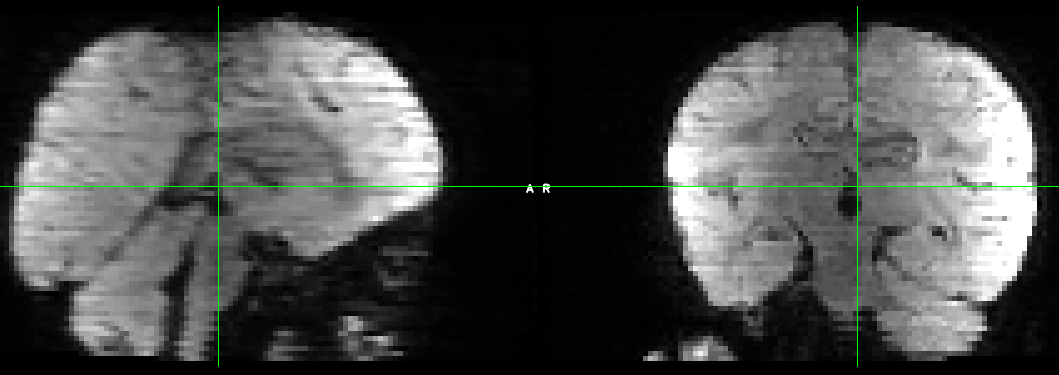
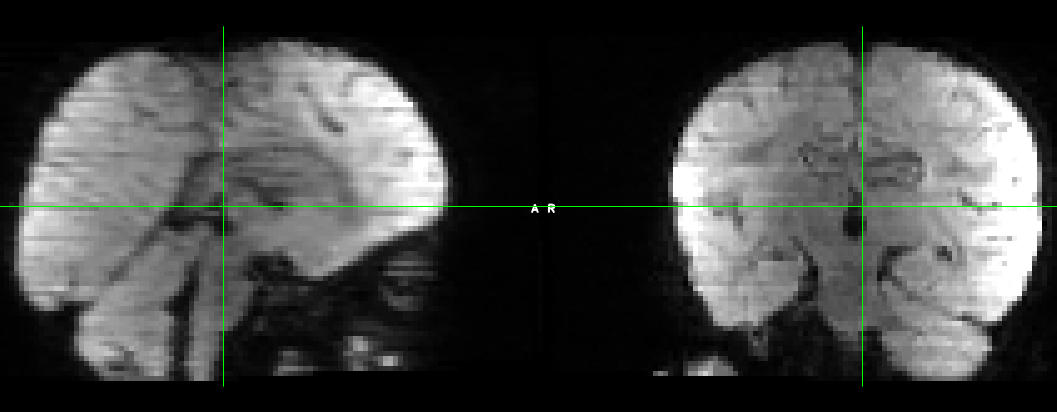
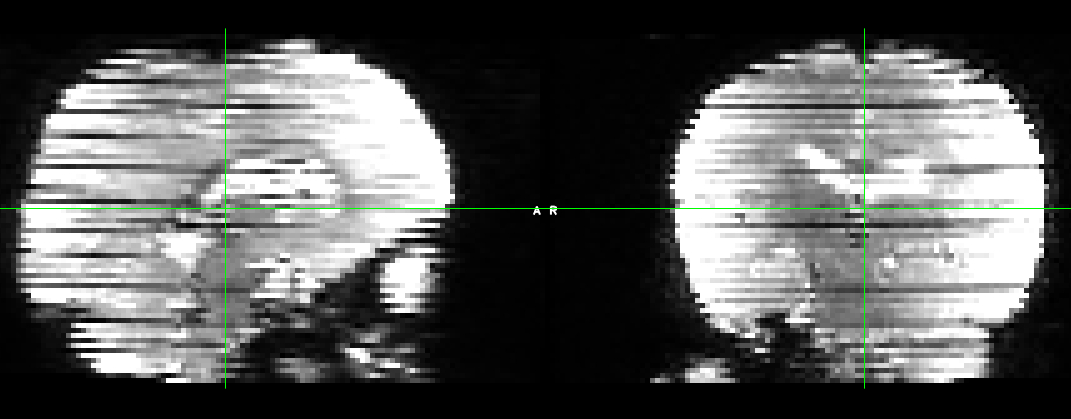
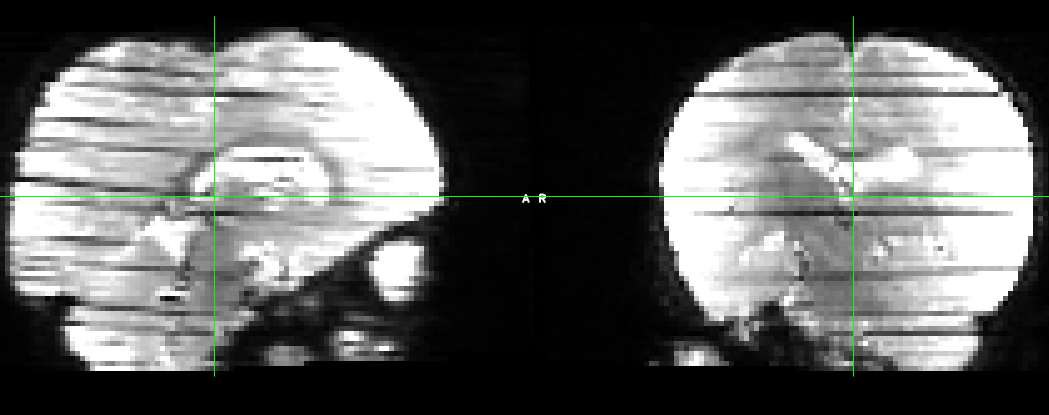
Just posting very preliminary results here to leave some documentation and help future researchers. At plain sight, Eddy’s S2V correction shows super promising results, including in volumes that are highly corrupted by slice drop-out.
These are examples of b=400 (top) and b=0 for a single infant. S2V is always the bottom image.
b=400
QSIPrep, no S2V
QSIPrep + S2V
b=0
QSIPrep, no S2V
QSIPrep + S2V