I am new to diffusion MRI and QSIPrep, and I am finding several problems.
I am working with single-shell, full fourrier, prescan normalized data.
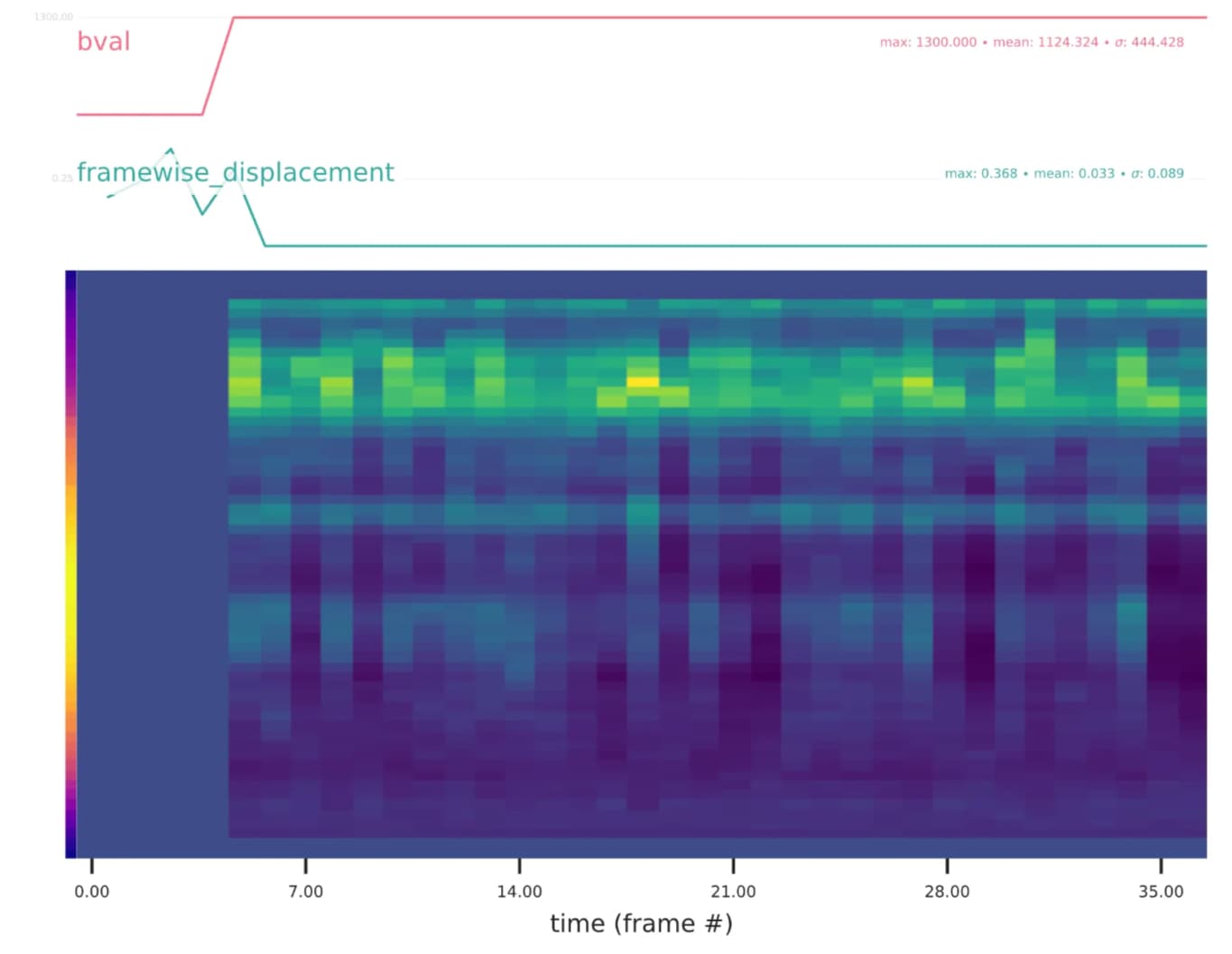
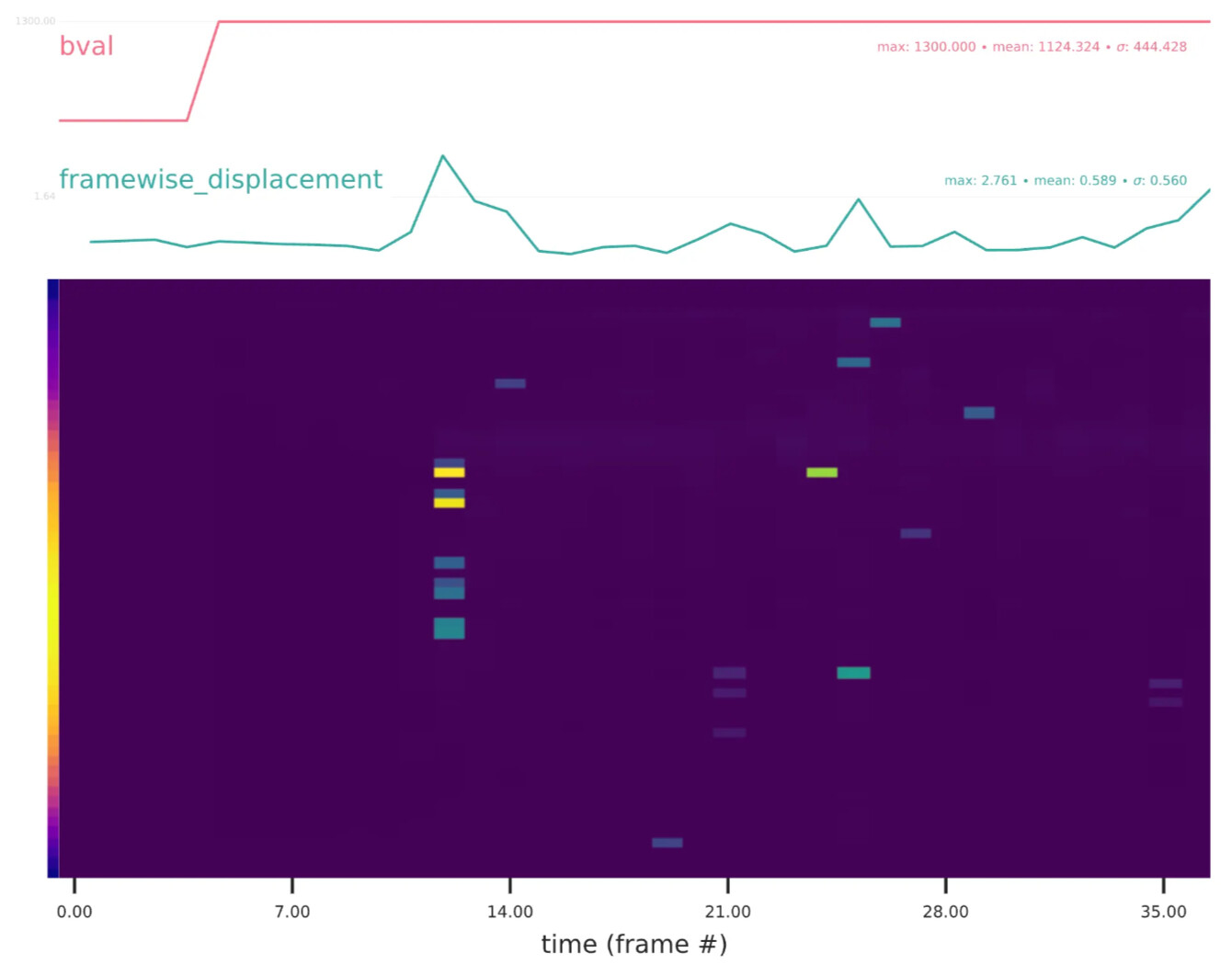
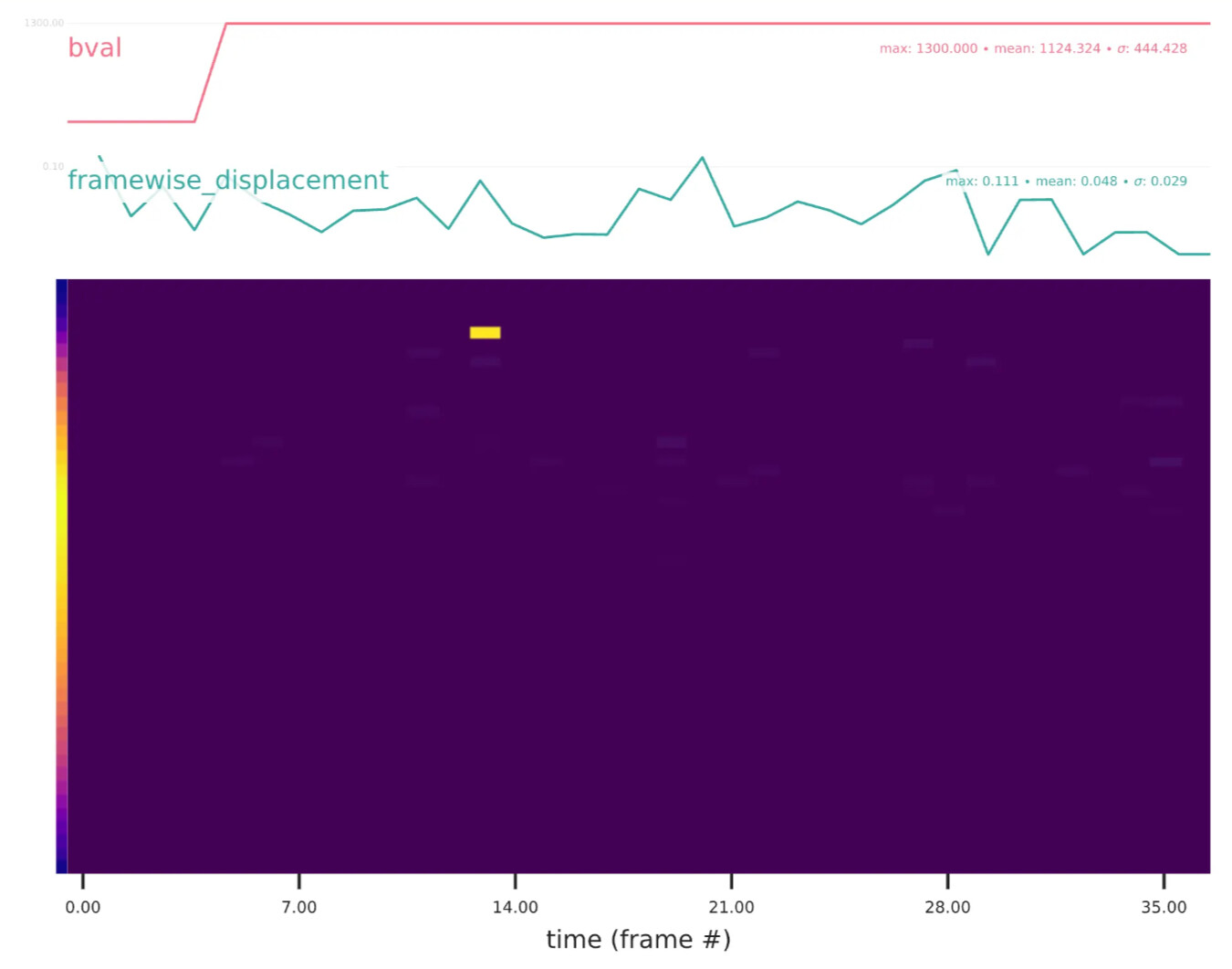
The html output looks ok, but I am not sure how to interpret the framewise displacement section. Based on Power et al.,2012, the cutoff for framewise displacement is set at 0.50 mm. There are 3 different measures on the plot: max, mean and variance. Which one should I look at? Also I assume the measure unit is mm? Also, I get very different carpetplots from one subject to another, is that normal?
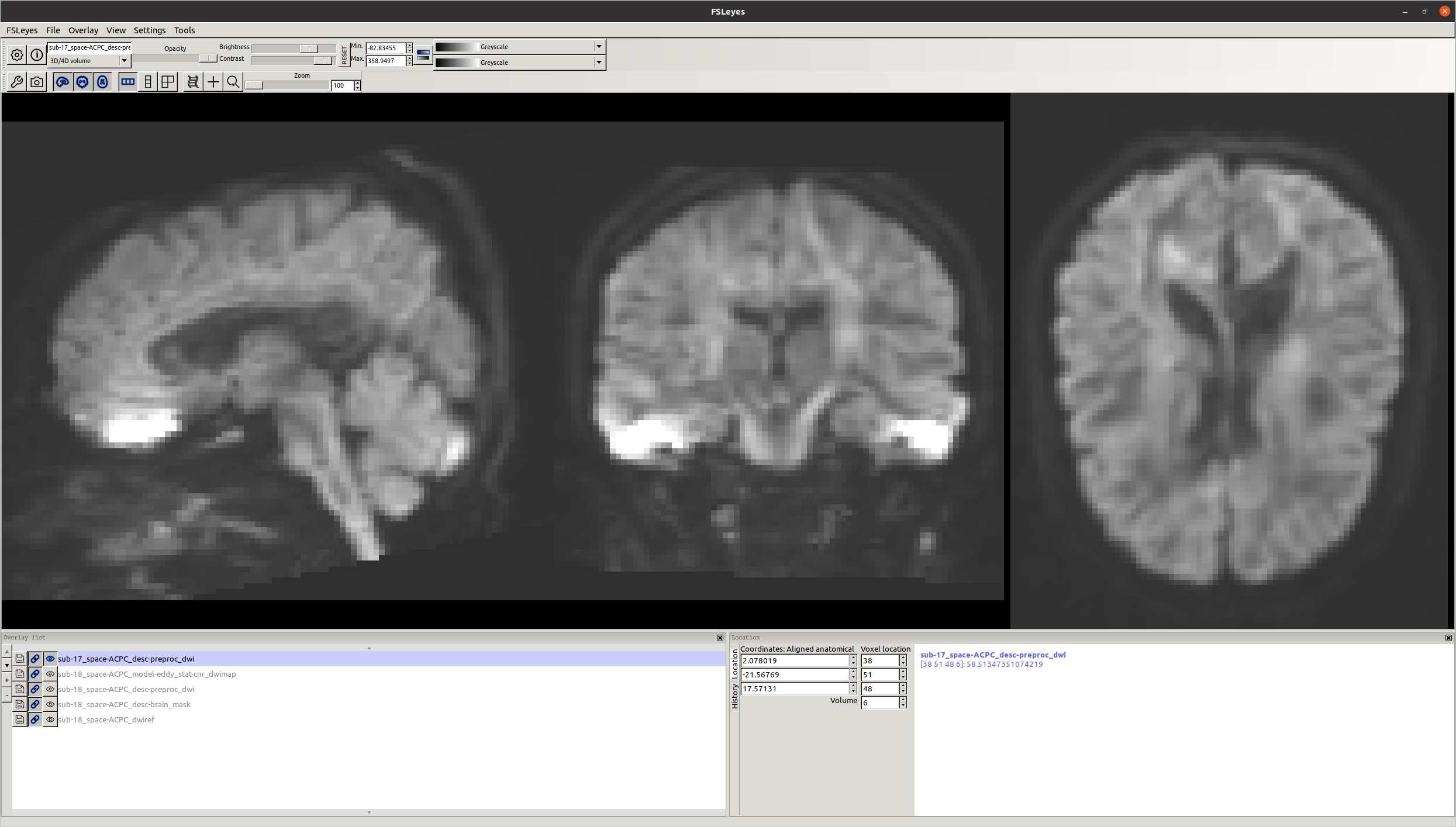
Finally, most of the preprocessed dwi images have hyperintensities in the OFC and ventro-temporal cortex, is that normal? If not, how can I fix it?
Thank you so much for your help !
Command used (and if a helper script was used, a link to the helper script or the command generated):
I’m the future please use the software support post template. You can see I edited in for you this time.
That guideline is for fMRI which typically has lower FD values than DWI, since the TR for DWI is typically much longer (so there’s more time between volumes for motion to occur).
Yes
All can be useful. A high max FD could lead to problems with a volumes head motion correction. Especially if you have a low number of volumes, that could confound the fitting of a diffusion tensor. But most commonly, mean FD is used as a modeling covariate.
It would help to see pics, but there’s a chance susceptibility distortion correction could help. Do you correct with field maps? If not, consider synthesizing a field map with SynB0-DisCo.
I will make sure to use the template for future posts.
Noted for Power et al., 2012. Is there then a guideline for FD in DWI? Or what would the typical range of FD values? Also, do the carpetplots I shared look fine?
Concerning the hyperintensities, I do use field maps. Here is a screenshot of the output:
There is no set recommendation for FD in DWI. This is in part because, especially for something as simple as a diffusion tensor, models are generally overfit because of how many directions are collected, so they are generally robust to noise when using modern preprocessing methods.
The hyper intensities do not look ideal, but are those regions important for your study hypotheses?
Just to add that if excessive motion is a concern, there are methods to fit DTI that are particularly “robust” to artifacts that are isolated to particular volumes in the acquisition. They essentially do this by fitting a model and then detecting volumes that are not well fit by the model and excluding them automatically. There is an implementation of such a model called RESTORE here.