Dear all,
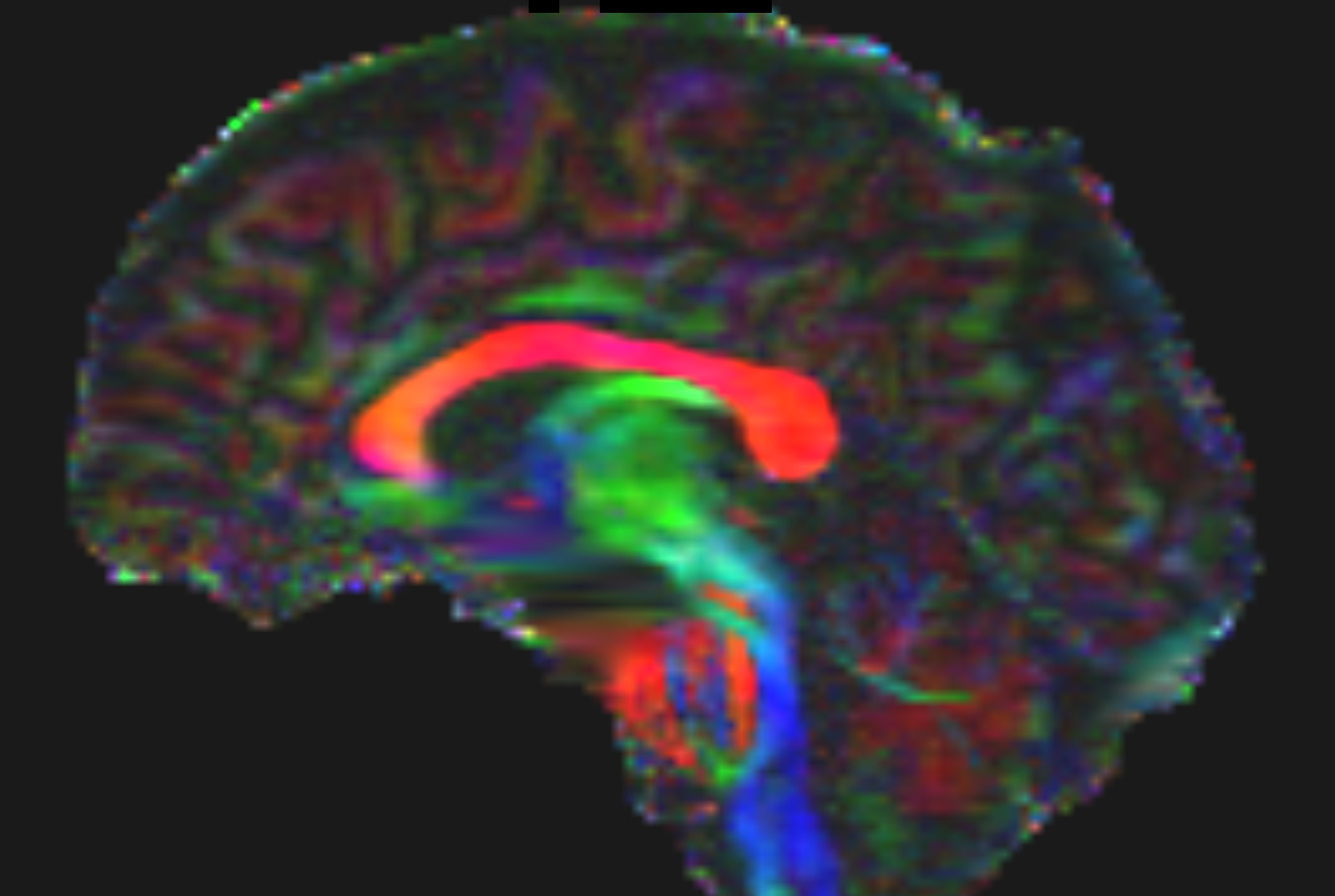
I would like to ask if our results look OK to other experienced users. Please see below a color FA map of one of our subjects:
We used TOPUP to correct for susceptibility distortions, but apparently not with complete success (note the stretching of anatomy behind the sphenoidal bone).
I think it’s due to the fact that we don’t use in-plane acceleration (only multiband, factor of four). As a result, the distortions TOPUP has to correct are too large to correct fully.
I would like to ask if this is something we shouldn’t worry about too much, or if this needs addressing.
As a second question: do you experienced users think that a combination of GRAPPA = 2 and MB = 3 give good results with the CMRR EPI sequence and 64 channel head/neck coil for 1.5 mm (or 1.6 mm) isotropic resolution?
I can share additional details if needed.
Thank you very much in advance.
Best regards.
Samuel
I’d start with the b0 images rather than the FA map. TOPUP’s --iout gives a corrected volume for each input, and the FSL guide suggests flicking through them in FSLeyes to check whether the anatomy still moves between volumes: Users guide - FSL - FMRIB Software Library
Do the brainstem boundaries line up in those corrected volumes? A de-identified before/after view, together with the TOPUP command and acquisition-parameter rows, would help separate a correction problem from something introduced later in the pipeline. Agreement between the corrected images wouldn’t by itself prove the geometry is right, but it would narrow down where to look. I wouldn’t choose GRAPPA/MB settings from this FA view alone.
Thank you for the quick reply.
Please find the additional details below:
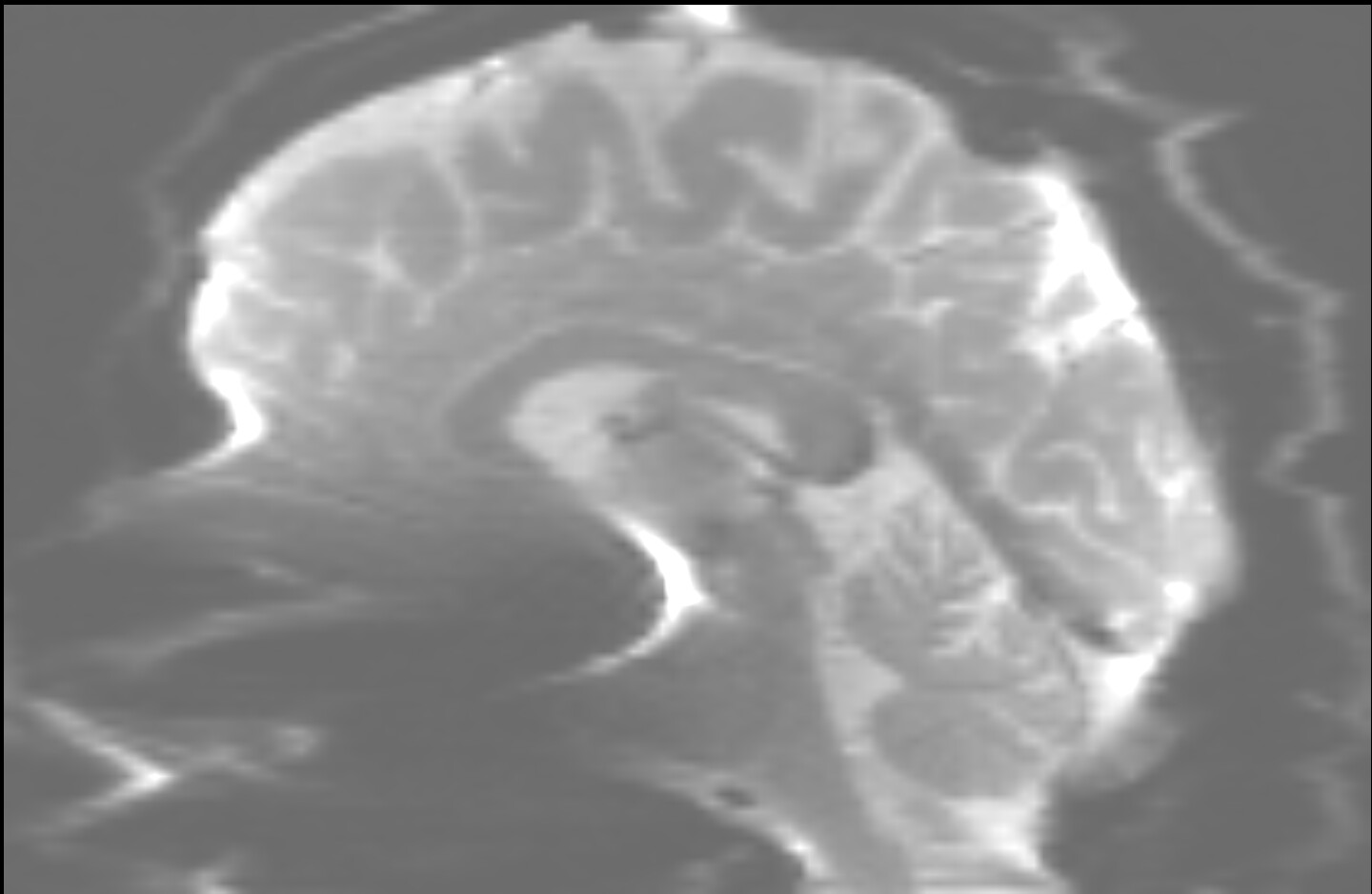
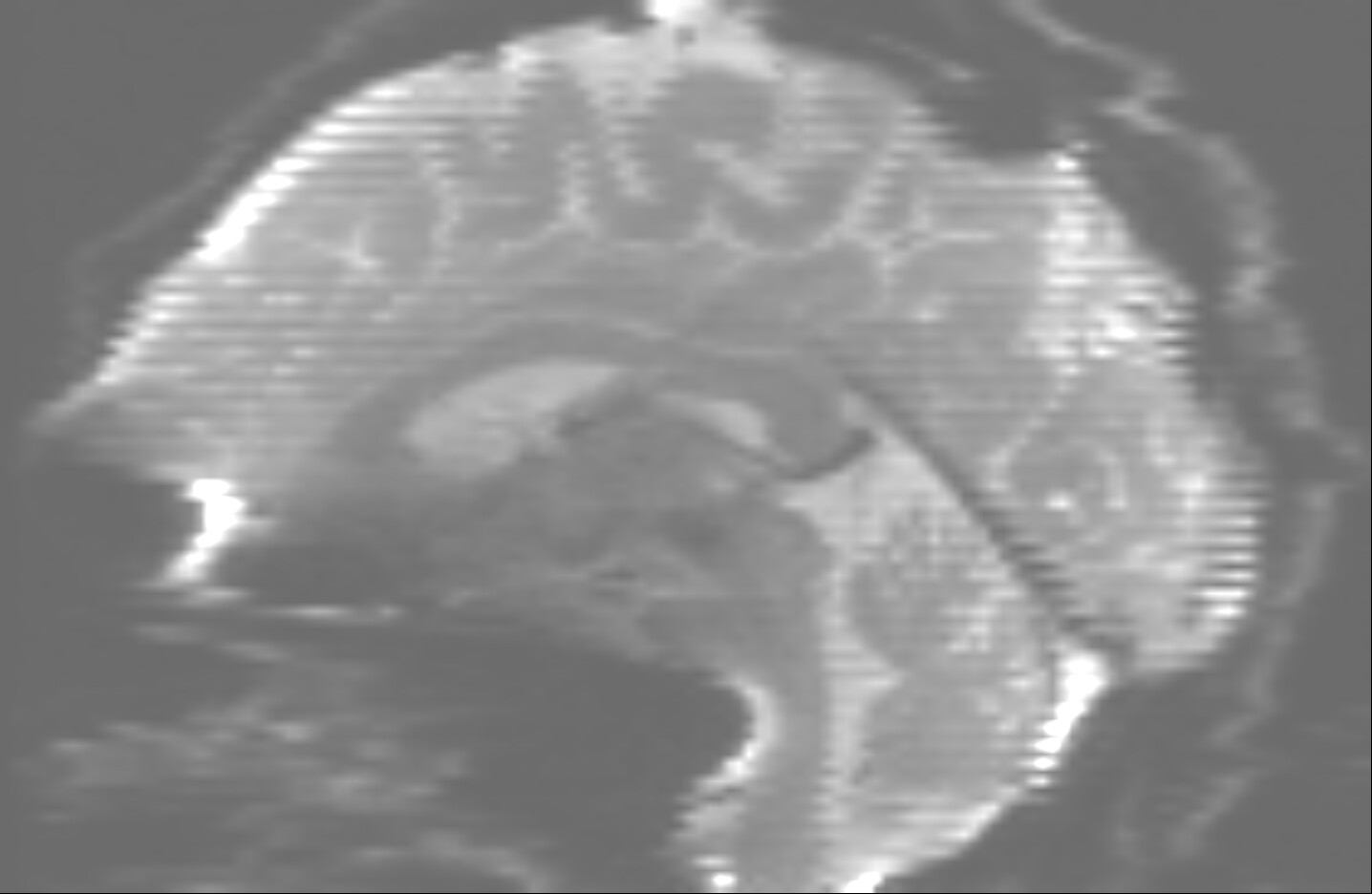
b0 AP (before):
b0 PA (before):
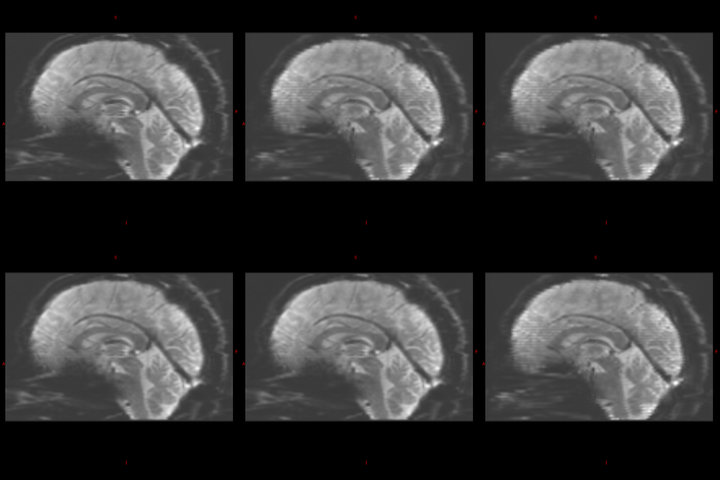
Unwarped images:
Acquisition parameters:
0 -1 0 0.0959097
0 1 0 0.0959097
TOPUP command:
topup --imain=b0_main_other --datain=acq_par.txt --config="$configfile" --out=topup_results --iout=b0_unwarp --fout=field -v --nthr=32
where $configfile is set based on the number of slices, in this case it was $configfile=”b02b0.cnf”
Thank you very much.
Best regards
Samuel
Thanks, Samuel. What happens between this TOPUP call and the FA calculation: are you passing topup_results to EDDY, or using applytopup?
If it is EDDY, I would check that the first volume in b0_main_other is also the first b0 of the diffusion series. FSL recommends that arrangement so the estimated field is aligned with the diffusion data. The command that applies the correction, plus the volume order, would help check that step: Users guide - FSL - FMRIB Software Library
I can’t tell from the screenshots whether the remaining shape is acceptable, so I wouldn’t change the acquisition settings on that basis yet.
Thanks again for the quick reply. We are feeding the results to EDDY. We run EDDY from within a Python script that modifies some of the inputs based on the data (we have data from two different scanners), please see below:
import json
import math
import os
import sys

nslices = sys.argv[1]
nslices = int(nslices)

f = open("dti.json", "r")
fj = json.loads(f.read())
f.close

mb = fj["MultibandAccelerationFactor"]

mporder = math.floor(nslices / mb * 0.5)

com = "eddy_cuda --imain=dti_dg --mask=brain_mask --index=index.txt --acqp=acq_par.txt --bvecs=dti.bvec --bvals=dti.bval --out=dti_ecc --slm=linear --repol -v --estimate_move_by_susceptibility --topup=topup_results --mporder=" + str(mporder) + " --s2v_niter=5 --s2v_lambda=5 --s2v_interp=trilinear --json=dti.json --cnr_maps --residuals"

os.system(com)
Yes, it is the case, the first volumes in both series are the same volume.
I uploaded all the relevant data onto OneDrive. You can access them through the link below:
data_neurostars
I will send you the password in a message.
Thank you again for your time and effort.
Samuel